
How to Do Change Management for Sustainability & ESG Initiatives
In this comprehensive guide, you will learn exactly how to apply a proven, step-by-step organizational change management framework to drive successful Sustainability and ESG (Environmental, Social, and Governance) initiatives.
Whether you are a change manager, project manager, program lead, or transformation executive, this article provides a practical roadmap for leading organizational change for Sustainability & ESG implementation. It focuses on real-world application, addressing your pain points and search intent—helping you deliver measurable, lasting adoption of Sustainability & ESG practices across your organization.
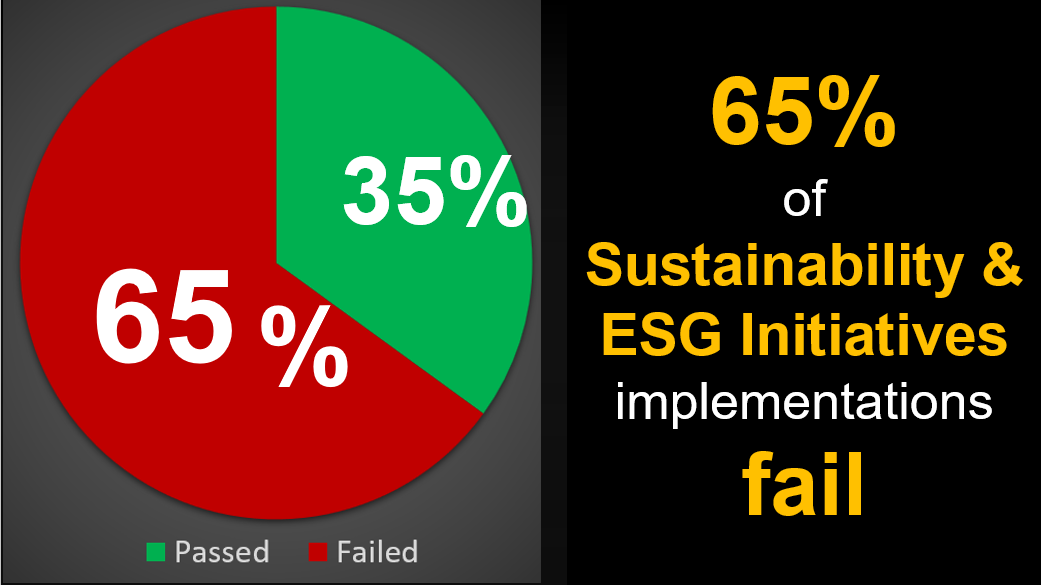
Research and industry insights reveal that over 65% of Sustainability and ESG initiatives fail to achieve their intended outcomes and ROI. These failures did not occur because sustainability frameworks or ESG platforms are ineffective. Instead, they result from insufficient change management, poor stakeholder engagement, lack of leadership alignment, and limited change adoption.
In most cases, organizations underestimate the people side of change, focusing heavily on the technical side of change. As a result, the Sustainability and ESG initiative never reaches full operational integration, leaving ESG goals underdelivered and business value unrealized.
The Proven 4-Phase Change Management Framework for Sustainability & ESG Implementation
A successful Sustainability & ESG implementation requires more than good intentions—it needs a structured, scalable approach to change. The framework below outlines how to drive adoption and long-term impact using a Repeatable, Scalable, Flexible, and Iterative Change Management Framework.
| Phase | Objective |
|---|---|
| Phase 1 – Assess Readiness | Evaluate current organizational readiness for Sustainability & ESG, identify cultural, process, and capability gaps, and establish a change baseline. |
| Phase 2 – Design & Develop | Create strategies, plans, and enablement materials to drive awareness, engagement, and capability-building for the ESG initiative. |
| Phase 3 – Implement & Manage Adoption | Execute change plans, deliver communications and training, manage resistance, and track adoption. |
| Phase 4 – Sustain & Reinforce | Embed Sustainability & ESG into business-as-usual operations, maintain engagement, measure ongoing adoption, and reinforce desired behaviors. |
This model is scalable for enterprises, iterative for ongoing programs, and flexible for organizations at any maturity level in Sustainability & ESG transformation.
Phase 1: Assess Readiness for Sustainability & ESG Implementation
The Assess Readiness phase establishes your baseline for change. Before designing communications or training, you must understand where your organization stands, what’s changing, and who is affected.
1. Conduct Current State and Culture Assessments
What and Why:
Determine your organization’s current culture, leadership alignment, processes, and change maturity level to gauge readiness for Sustainability & ESG. This identifies where you need to focus your enablement and change strategies.
How:
Use structured assessments, surveys, interviews, and focus groups. Analyze cultural patterns related to innovation, accountability, and collaboration. Identify sustainability awareness, environmental consciousness, and behavioral alignment with ESG values.
Deliverable:
A Readiness & Culture Assessment Report that summarizes:
Organizational strengths supporting Sustainability & ESG.
Cultural and capability gaps.
Recommendations for alignment and leadership modeling.
2. Conduct Change Impact Assessments
What and Why:
Pinpoint exactly what will change, who will be affected, and the scale of the impact. Sustainability & ESG implementations often touch multiple departments—finance, procurement, supply chain, HR, IT, and operations.
How:
Identify “from–to” scenarios for each process or role.
Score each change by impact level (low, medium, high).
Assess breadth (number of employees affected).
Use a Change Impact Matrix to visualize the level and type of change per group.
Deliverable:
A Change Impact Register that documents the type, scope, and severity of changes, linked to the business processes and departments affected.
3. Identify Risks and Resistance to Sustainability & ESG Rollout
What and Why:
Understand the root causes of resistance that may derail adoption. People resist ESG change for various reasons—lack of understanding, fear of accountability, workload concerns, or skepticism about ROI.
How:
Conduct resistance risk workshops and interviews.
Review past transformation outcomes for resistance patterns.
Categorize resistance sources (emotional, informational, systemic).
Develop mitigation plans for each risk area.
Common Resistance Points:
“Sustainability adds extra work without clear benefit.”
“ESG metrics are unclear.”
“We already have sustainability processes.”
“This initiative feels like compliance, not improvement.”
Deliverable:
A Resistance Risk Register outlining potential barriers, severity, owners, and mitigation strategies.
4. Map Stakeholders and Change Champions
What and Why:
Identify who influences, who is impacted, and who can champion the change. Stakeholders are your leverage points for engagement and advocacy.
How:
Create a stakeholder map that classifies individuals by influence, impact, and support level.
Select Change Champions across business units who can model behavior and communicate benefits.
Key Stakeholder Groups to Include:
Executive Leadership & Governance
Sustainability / ESG Team
Finance & Accounting
Procurement & Supply Chain
Operations / Manufacturing
HR / People & Culture
Legal & Compliance
IT / Data Analytics
Marketing & Communications
Risk & Internal Audit
Deliverable:
A Stakeholder Matrix and Champion Roster that identifies stakeholders’ roles, influence, and engagement needs.
5. Conduct Enablement Needs Assessment
What and Why:
Identify what each group needs to successfully adopt Sustainability & ESG. Enablement covers communication, training, and engagement preferences.
How:
Assess training requirements, communication style preferences, and content needs.
Segment audiences by persona (e.g., leaders, front-line, analysts).
Use focus groups to understand knowledge and confidence gaps.
Deliverable:
A Role-Based Enablement Matrix detailing learning preferences, readiness scores, and communication channels for each persona.
6. Deliver Readiness Surveys and Interviews
What and Why:
Measure awareness, understanding, and desire to support the Sustainability & ESG change.
How:
Deploy surveys to capture awareness, confidence, and perception metrics.
Conduct interviews to gain qualitative insights on readiness.
Score readiness using a “heat map” visualization.
Deliverable:
A Readiness Assessment Report summarizing survey data, interview themes, and readiness gaps to address in your strategy.
Phase 2: Design & Develop the Sustainability & ESG Change Strategy
Once you understand your organization’s readiness and impact landscape, move into Design & Develop. This is where you build your playbook for enabling successful Sustainability & ESG adoption.
1. Develop Change Management Strategies
What and Why:
Define the overarching strategies guiding your Sustainability & ESG change approach. There are eight primary strategies to define.
Components:
Leadership Alignment & Sponsorship Strategy
Communication & Engagement Strategy
Training & Enablement Strategy
Stakeholder & Sponsorship Strategy
Resistance & Risk Management Strategy
Adoption & Measurement Strategy
Change Champion Network Strategy
Sustainment & Continuous Improvement Strategy
Each strategy aligns with a specific objective—for example, communication strategy ensures timely, audience-specific messaging while sustainment strategy secures long-term adoption.
Deliverable:
An Integrated Change Management Strategy Deck summarizing all eight strategies with key objectives and success measures.
2. Create Detailed Change Management Plans
What and Why:
Each strategy needs executable plans to operationalize it. These detailed plans ensure clarity of ownership and alignment across teams.
How:
Create the following plans:
Change Impact & Readiness Plan
Communication & Engagement Plan
Stakeholder & Sponsorship Plan
Training & Enablement Plan
Resistance & Reinforcement Plan
Measurement & Adoption Tracking Plan
Change Network Plan
Sustainment & Continuous Improvement Plan
Deliverable:
A Comprehensive Change Management Plan Package covering all activities, owners, timelines, dependencies, and KPIs.
3. Develop a Holistic Roadmap
What and Why:
The roadmap brings all plans together into a timeline that ensures communication, training, and reinforcement occur in the right order.
How:
Use a Gantt chart or roadmap visual.
Include milestones for communications, training, go-live, feedback, and sustainment.
Align with program milestones.
Deliverable:
An Integrated Change Roadmap showing sequencing, timing, and dependencies.
4. Create Communication Assets
What and Why:
Your communication assets drive awareness and sustain momentum across the Sustainability & ESG journey.
How:
Design audience-specific templates for announcements, newsletters, and reminders.
Use multiple formats: email, intranet, video, posters, webinars.
Tailor messages to highlight business value and personal relevance.
Examples of Communication Assets:
Kickoff session invites
Countdown and go-live announcements
Progress newsletters
ESG awareness videos
FAQ documents
Quick-use guides
Deliverable:
A Communications Toolkit ready for execution in Phase 3.
5. Develop Materials for Change Champions
What and Why:
Change champions are critical advocates who bridge communication between the project and end users.
How:
Conduct onboarding sessions explaining the Sustainability & ESG vision.
Provide them with a Change Champion Toolkit containing talking points, FAQs, and engagement tips.
Establish regular check-ins to share updates and collect feedback.
Deliverable:
A Change Champion Enablement Kit with onboarding materials, meeting templates, and recognition guidelines.
6. Develop Leadership Enablement Materials
What and Why:
Leadership alignment is the top predictor of success in Sustainability & ESG implementation.
How:
Prepare resources for leaders to model, communicate, and sustain adoption.
Components:
Leadership Engagement Guide
Day-in-the-Life Role Scenarios
Leadership Talking Points Toolkit
Leadership Action Roadmap
Deliverable:
A Leadership Enablement Pack that ensures executive sponsors understand their role and demonstrate visible commitment.
7. Create Enablement Site and Resources
What and Why:
Centralize all Sustainability & ESG learning, training, and communication materials in one accessible location.
How:
Build an internal SharePoint, intranet, or enablement portal.
Include micro-learning videos, job aids, FAQs, and community discussion boards.
Maintain an up-to-date repository of all resources.
Deliverable:
A Sustainability & ESG Enablement Hub to support continuous learning and engagement.
Phase 3: Implement & Manage Adoption for Sustainability & ESG Rollout
Now it’s time to put your plans into action. This phase focuses on execution, user engagement, training, leadership visibility, and adoption tracking.
1. Execute the Communication Plan
What and Why:
Ensure that every audience receives the right message at the right time through the right channel.
How:
Follow your communication matrix: audience, frequency, sender, channel, and objective.
Build anticipation before go-live, share updates during rollout, and celebrate early wins after adoption.
Reinforce business outcomes—how Sustainability & ESG contributes to efficiency, brand value, and compliance.
Deliverable:
A Communication Execution Tracker monitoring delivery, engagement, and feedback.
2. Launch and Manage the Change Champion Network
What and Why:
Empower champions to act as local advocates and feedback channels.
How:
Host a kickoff meeting with all champions.
Clarify their responsibilities and tools.
Create communication channels (Teams, Slack, Zoom) for real-time collaboration.
Schedule regular syncs to share updates and success stories.
Deliverable:
A Champion Network Engagement Plan including cadence, check-ins, and measurement metrics.
3. Deliver Leadership Coaching and Support
What and Why:
Leaders must model and sponsor change visibly and consistently.
How:
Conduct one-on-one executive coaching sessions.
Provide leaders with personalized dashboards showing their team’s adoption progress.
Supply leadership talking points and storytelling templates.
Recognize visible leadership behaviors (emails, team calls, recognition posts).
Deliverable:
A Leadership Engagement Report summarizing sponsorship effectiveness and engagement activities.
4. Deliver Hands-On Training and Educational Resources
What and Why:
Empower all users with the skills, knowledge, and confidence needed to apply new ESG-related processes or systems.
How:
Deliver interactive sessions—eLearning, workshops, job-shadowing.
Offer flexible training schedules and virtual access.
Reinforce learning through office hours, FAQs, and bite-sized refresher videos.
Deliverable:
A Training Completion Report and post-training survey analysis to measure knowledge gain and confidence.
5. Manage Resistance Proactively and Reactively
What and Why:
Address resistance early to prevent adoption slowdown.
How:
Track feedback and attendance data to detect disengagement.
Hold listening sessions to surface resistance drivers.
Use tailored interventions—additional training, manager coaching, or leadership escalation.
Deliverable:
A Resistance Mitigation Tracker capturing issues, actions, and results.
6. Measure Adoption and Success Metrics
What and Why:
Measure adoption rates and impact on business outcomes to evaluate success.
How:
Track key indicators:
Training completion rate
Communication reach and engagement
User confidence levels
ESG metric compliance and reporting accuracy
Champion activity levels
Behavioral indicators (e.g., sustainable procurement rates)
Deliverable:
A Change Adoption Dashboard visualizing progress and success metrics.
Phase 4: Sustain & Reinforce the Sustainability & ESG Change
Long-term success depends on reinforcement and integration into daily operations. Sustainability must evolve from a project into a business norm.
Maintain the Change Network and Feedback Loops
What and Why:
Continuous engagement ensures sustainability becomes a habit.
How:
Continue regular champion meetings.
Maintain Teams or Slack channels for peer support.
Run quarterly surveys to collect ongoing feedback.
Deliverable:
A Network Sustainment Log summarizing engagement activities and insights.
Continue Office Hours and Support
What and Why:
Support users long after go-live to reinforce behavior and skills.
How:
Offer periodic refresher sessions and new-hire onboarding modules.
Keep training and FAQs updated on the enablement portal.
Provide quick response to user questions or challenges.
Deliverable:
A Continuous Learning Calendar integrated into ongoing operations.
Measure Normalized Change Adoption
What and Why:
Evaluate whether the new behaviors are embedded into business-as-usual.
How:
Use pulse surveys, system analytics, and observation.
Compare initial adoption data to steady-state performance metrics.
Deliverable:
An Adoption Normalization Report showing progress toward sustained adoption.
Capture and Integrate Lessons Learned
What and Why:
Use experience to improve future ESG rollouts.
How:
Conduct post-implementation reviews with all stakeholder groups.
Identify what worked, what didn’t, and actionable improvements.
Deliverable:
A Lessons Learned Repository accessible for future reference.
Reinforce and Recognize Adoption
What and Why:
Recognition motivates ongoing participation and improvement.
How:
Publicize success stories in newsletters.
Recognize high-performing teams through internal awards.
Celebrate milestone achievements (e.g., “100% ESG compliance achieved”).
Deliverable:
A Recognition Plan with frequency, format, and award criteria.
Embed Change into Business-as-Usual Operations
What and Why:
Integrating ESG into KPIs, processes, and governance ensures continuity.
How:
Update job descriptions to include ESG responsibilities.
Incorporate ESG performance into appraisals and dashboards.
Make sustainability topics recurring agenda items in leadership meetings.
Deliverable:
An ESG Integration Plan defining BAU ownership, metrics, and governance processes.
How Airiodion Group Consulting Can Help
If you are looking for the best change consultant for Sustainability & ESG implementation or a change management consulting firm for Sustainability & ESG integration, Airiodion Group Consulting offers tailored expertise and methodologies to ensure successful adoption.
Airiodion Group specializes in:
Organizational change management strategy for Sustainability & ESG implementation.
Readiness assessments and stakeholder engagement.
Development of change toolkits, roadmaps, and enablement portals.
Communication and training design to accelerate ESG adoption.
Measuring change success in Sustainability & ESG projects.
Embedding organizational change into BAU operations.
Partnering with Airiodion Group ensures your ESG transformation is practical, data-driven, and sustainable.
Learn more about their change management consultancy services here:
https://www.airiodion.com/change-management-consultancy/
Conclusion: Embedding Lasting Change for Sustainable Impact
Implementing Sustainability & ESG initiatives requires more than policies—it requires people embracing new behaviors, systems, and accountability models. By following this organizational change management framework for Sustainability & ESG implementation, you can:
Assess readiness and prepare stakeholders.
Design strategies and tools that enable adoption.
Execute structured communication, training, and leadership alignment.
Sustain momentum through reinforcement, measurement, and integration into daily business.
When done right, change management transforms Sustainability & ESG from a compliance effort into a competitive advantage—embedding purpose, performance, and long-term value throughout your organization.
Do you need change management consulting support or help?
Contact Airiodion Group, a specialist change management consultancy that supports organizations, project managers, program leads, transformation leaders, CIOs, COOs, and more, who are navigating complex transformation initiatives. For general questions, contact the OCM Solution team. All content on ocmsolution.com is protected by copyright.